Whether you drive for work, commute regularly or spend long hours behind the wheel, your driving position can have a significant impact on comfort, fatigue and musculoskeletal strain.
A poorly adjusted driving position in a car, van or lorry can place unnecessary stress on the lower back, neck, shoulders, hips and legs. Over time, this may contribute to discomfort, particularly for people who spend several hours a day driving.
The good news is that small adjustments to your driving position can make a significant difference to your comfort. I'm passionate about ergonomics being more than what's at your desk.
In this blog, we look at:
- How to set up your car or other vehicle ergonomically.
- How additional posture supports can help when the standard vehicle seat does not provide the level of support you might need.
- The employer’s duty of care to staff driving for work.
As a qualified Ergonomist at Posturite, I see on a daily basis the transformation in health, wellbeing and comfort that adjustments to our bodies’ positioning can make in our daily lives, including in the car. Ergonomics helps us to enjoy a lifestyle undistracted by pain or discomfort.
Why is driving ergonomics important?

When driving we maintain a relatively static posture for prolonged periods and we carry out repetitive movements with our hands, arms and legs. Unlike a typical office workstation, there is very little opportunity to change position. As drivers, our posture is influenced by the design of the seat, steering wheel, pedals, gear stick and the available adjustment range.
An unsuitable driving position may contribute to:
- Lower back discomfort
- Neck and shoulder tension
- Hip or pelvic discomfort
- Leg fatigue
- Pressure behind the knees
- Increased reaching through the arms and shoulders
- General fatigue during longer journeys
Good driving ergonomics is therefore about finding a position that provides adequate support while allowing us to operate the vehicle safely and comfortably.
How to set up your driving position
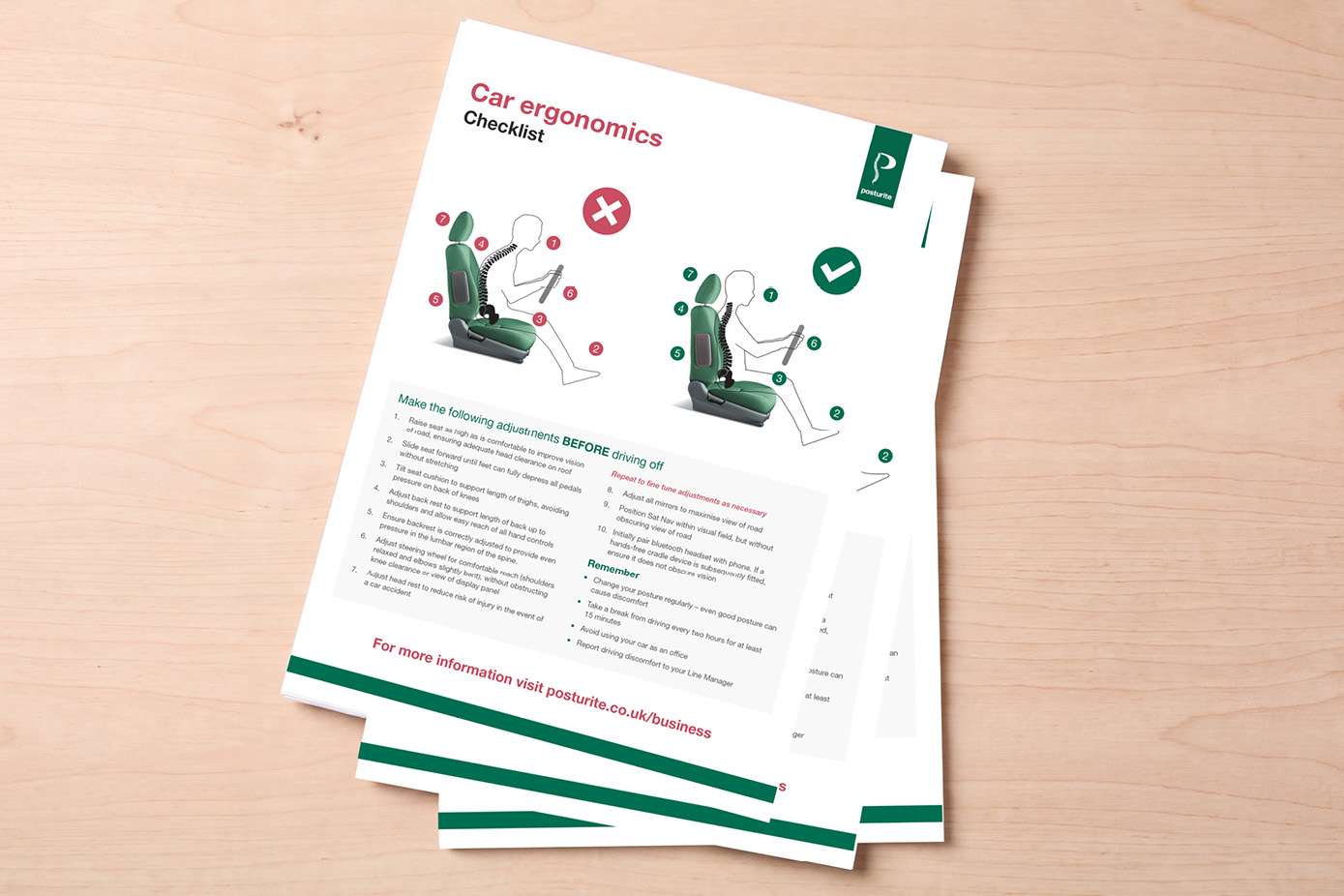
Your body dimensions, vehicle design and individual requirements all need to be considered for a comfortable ergonomic driving position. There is no single driving position that is perfect for everyone, but the following guide is a useful starting point:
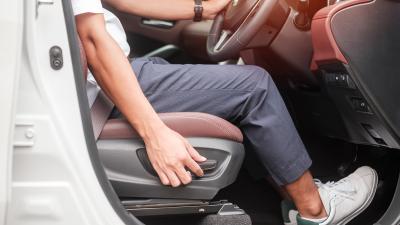
1. Start with the distance from the seat to the pedals
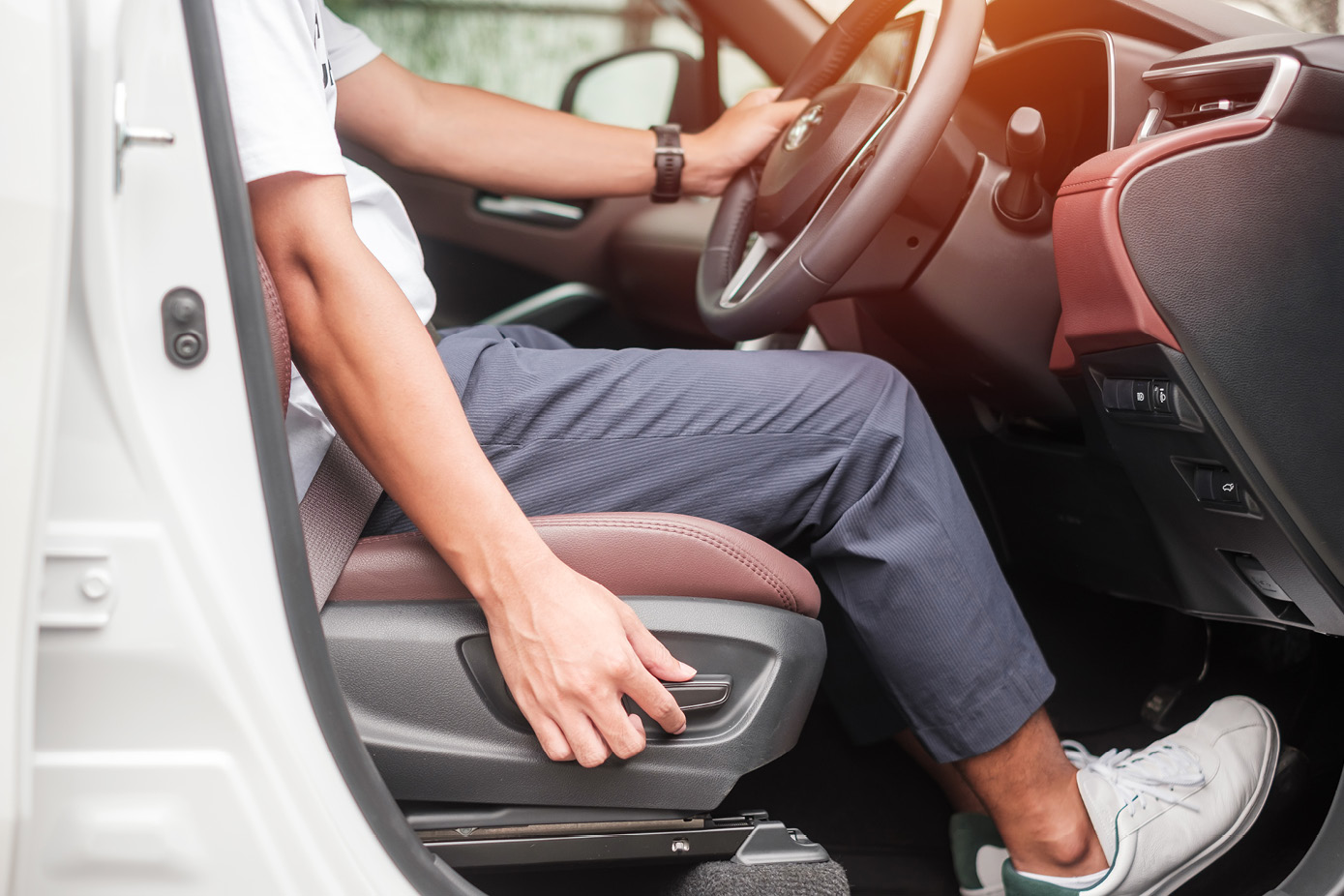
Before adjusting the steering wheel, set the driver's seat.
Move the car seat forwards or backwards so that you can operate the pedals without having to fully straighten your leg or reach excessively. When pressing the pedals, you should retain a comfortable bend in the knee rather than having the leg fully extended. This helps reduce excessive reaching through the lower limb and allows you to maintain better contact and support from the seat.
Avoid positioning the seat so close to the pedals that your knees are excessively bent, as this can also reduce available space and comfort.
2. Adjust the seat height
Set the seat height so that you have good visibility of the road while maintaining adequate clearance between your head and the vehicle roof. Most people in a car prefer to have around 5 centimetres of headroom between their head and the interior car roof. You’ll likely have more headroom in a van of course.
Where possible, aim to maintain a relatively neutral position through the pelvis and spine rather than using excessive seat height or recline to achieve your preferred view. In simple terms, this means sitting comfortably upright, with your back supported by the seat and without excessive slouching, leaning or rounding of the spine.
Your thighs should be supported by the seat cushion without creating excessive pressure behind the knees. Ensuring the seat height is sufficient to provide full contact under the thigh will reduce this risk.
3. Adjust the seat back
In an ergonomic driving position, the seat back should provide support for your back without requiring you to sit excessively upright or reclined. A slight recline can help distribute support across the back, but excessive recline may encourage you to reach further towards the steering wheel.
The important consideration is that your back remains supported (in contact with the seat), while you can comfortably reach and operate the controls. If you find yourself leaning forwards away from the seat back while driving, this may indicate that the steering wheel is too far away or that the seat position needs further adjustment.
4. Now position the steering wheel

Ideally, the steering wheel should be close enough that you can comfortably operate it without reaching forwards through the shoulders. The elbows should maintain a slight bend for a suitable driving posture.
Don’t forget to maintain contact between your back and the seat while holding the steering wheel.
If your vehicle allows adjustment, use the steering column's height and reach functions to find a position that provides a comfortable relationship between your hands, arms and shoulders.
Avoid bringing the steering wheel so close that:
- it restricts leg movement
- it creates an unnecessarily cramped posture.
5. Adjust your car headrest
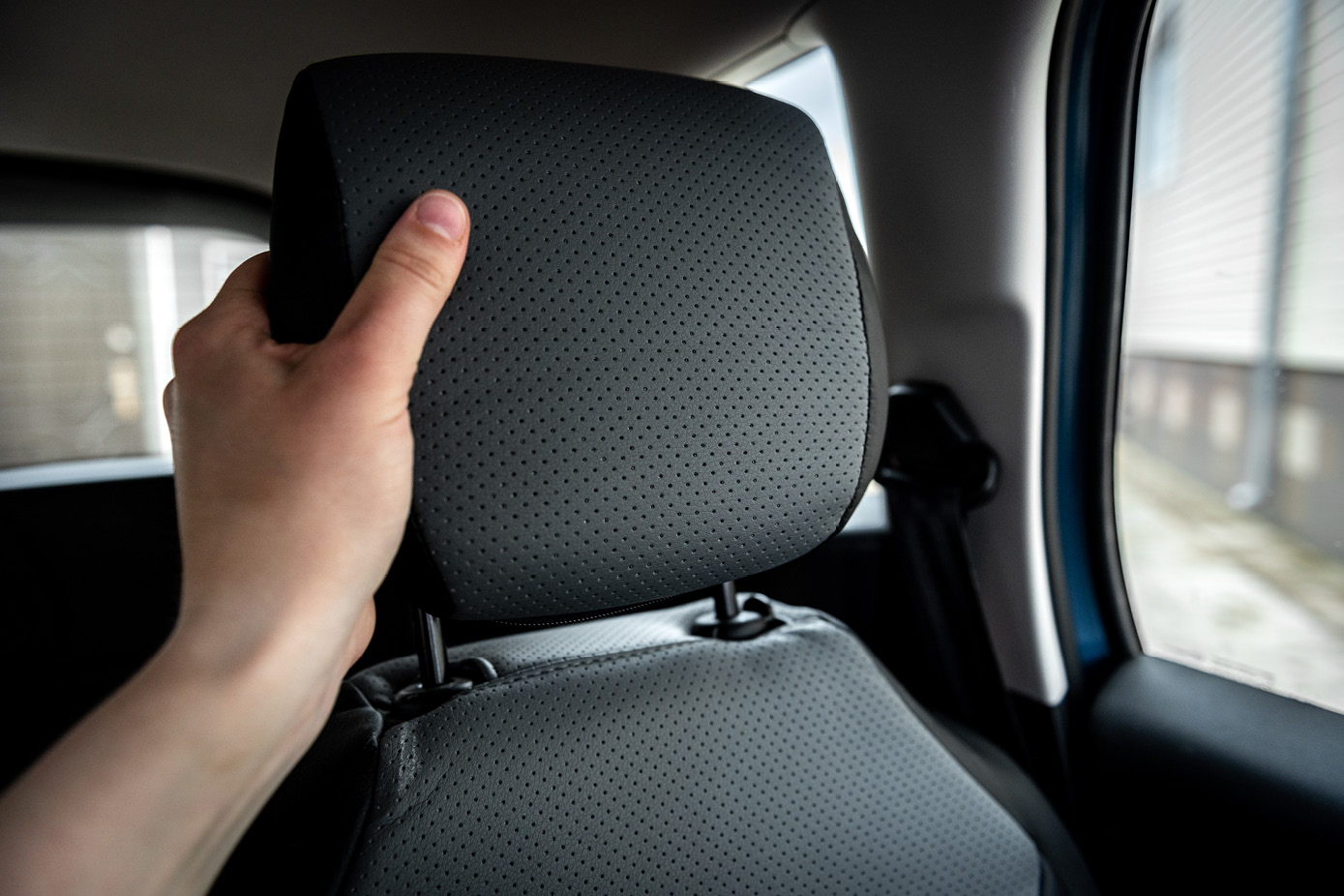
The headrest in your car helps protect your head and neck in the event of an accident. For optimum safety, place the headrest at a height where its centre is level with the top of your ears. This will help prevent hyperextension of your neck if a collision takes place.
Avoid using the headrest as a substitute for proper back support. The seat and backrest are the most important tools in your car for comfort and support, with the headrest having more of a safety focus.
Your primary focus should be achieving a comfortable, supported posture through the seat and backrest, with the headrest positioned appropriately for its intended safety function.
6. Check your mirrors
Adjusting your mirrors is an important final step because your car mirror position should allow you to obtain the required field of view without having to lean, twist or stretch.
Don't overlook the pedals and gear selector
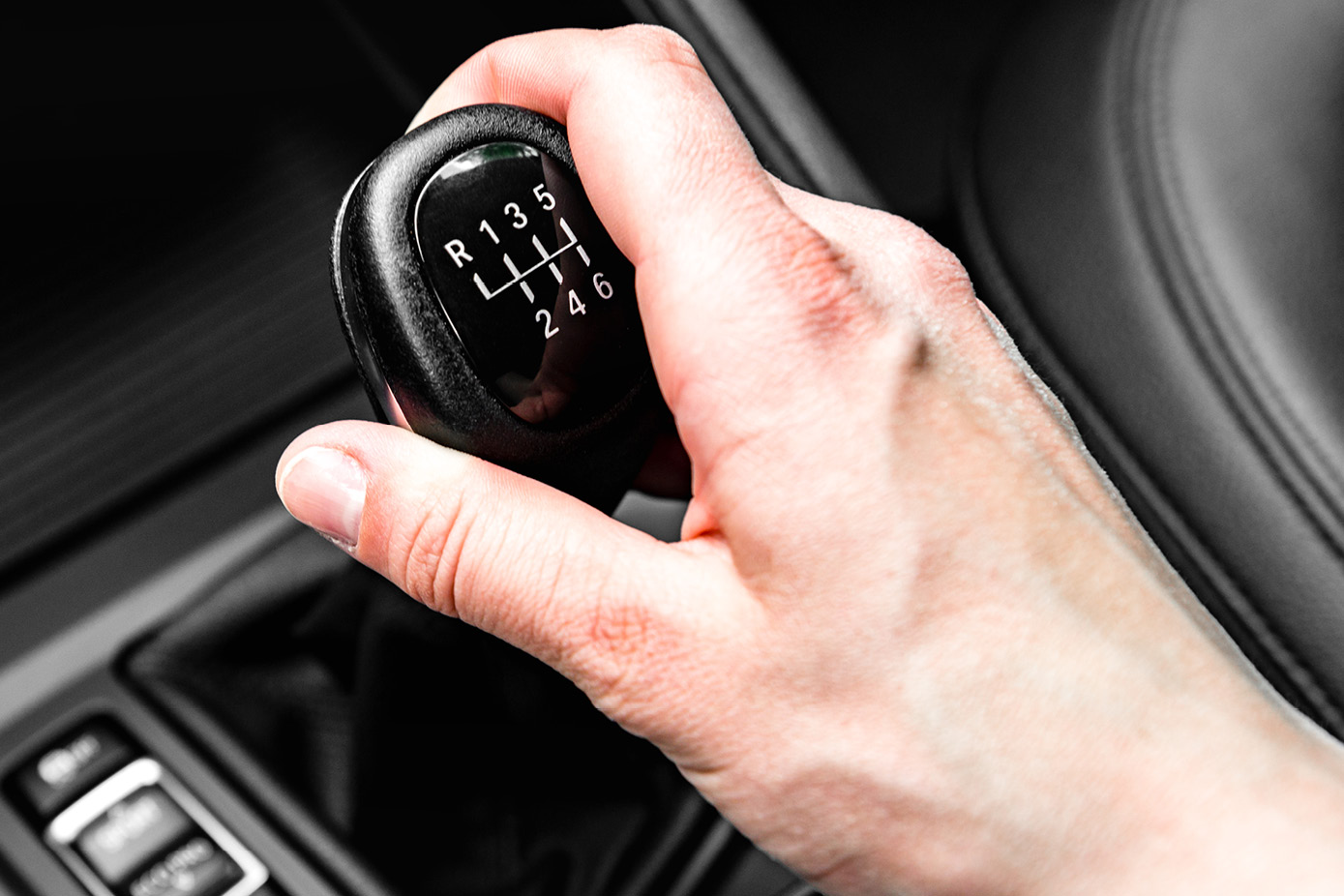
The relationship between the driver and the vehicle controls is an important part of vehicle ergonomics. The pedals should be comfortably accessible without excessive reaching or sustained stretching of the legs.
If you drive a manual vehicle, repeated clutch operation can also place additional demands on the left leg. If you already experience discomfort or have a specific physical requirement, this repeated movement in a manual car may be uncomfortable. The position of the gear selector can also influence upper-limb posture. A gearstick positioned further away may require repeated reaching through the shoulder and upper limb, particularly during longer journeys.
Therefore, when choosing a new car or van, consider if you need automatic transmission but also check where the gear selector is positioned to ensure it’s comfortable for you.
What if the standard vehicle seat still isn't suitable?
Even when a driving position has been adjusted correctly, the standard vehicle seat may not provide enough support for every driver. There might be a significant mismatch between the driver's body dimensions and the available car seat adjustment, or where an individual has specific comfort or support requirements.
In these circumstances, one of the following posture supports may help improve the relationship between the driver and the seat:
Lumbar support
A lumbar support can provide additional support to the lower back where the vehicle's built-in lumbar adjustment is insufficient. The aim is not to push the lower back forwards as far as possible, but to provide comfortable and appropriate contact while allowing the driver to maintain a relaxed and supported posture.
The Posturite Curve is one potential option, with its design providing targeted lumbar support while accommodating the contours of a vehicle seat.
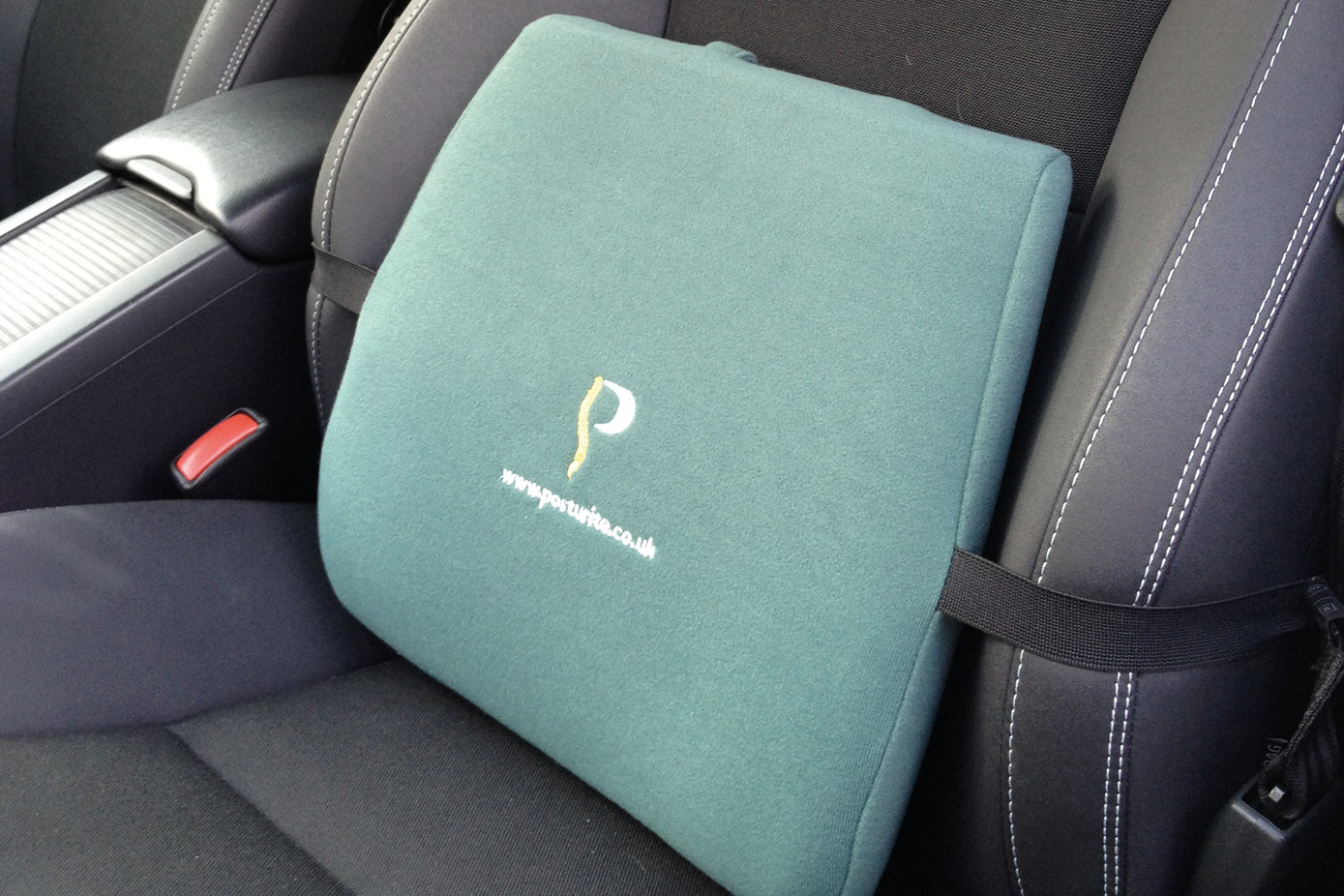
Posturite customer Vivienne said in her 5-star review that:
“I use this Posturite Curve in my car, as car seats are not comfortable or helpful for back pain. I have also bought one for a friend who has Parkinson’s and she takes it everywhere with her.”
Another option to prevent lower back pain from driving for work is a lumbar roll. To use a D-shaped lumbar roll in the car, fit the flat side against the seat back and the curved part will provide support for your lower back.
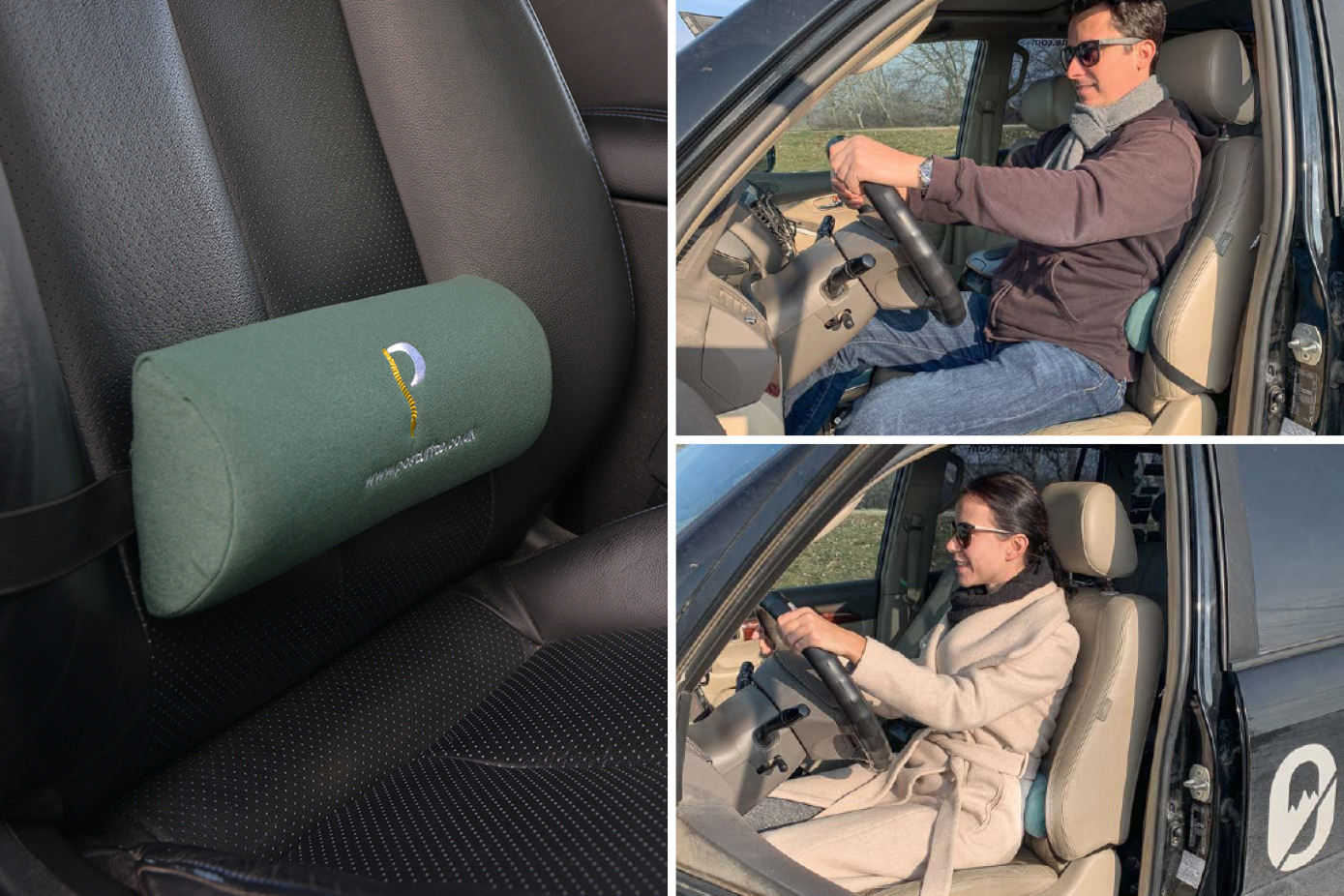
The fully circular lumbar rolls are recommended for people who have an excessive inward curve of the spine (pronounced lordosis).
“Lumbar rolls are a fantastic investment if you do a lot of driving, and your car does not have built-in support” says Motorfinity.
Seat cushions and specialised posture wedges in the car
A suitable seat cushion can alter the relationship between the driver and the vehicle seat. Depending on individual requirements, a cushion may help provide additional pressure distribution, cushioning or support.
The Posturite Coccyx Cut-Out Wedge is one potential option where additional pelvic positioning and reduced pressure around the coccyx are required. Your coccyx is your ‘tailbone’ and is the little bone at the very bottom of your spine.
“I spend up to 6 hours of an 8 hour shift driving and I have a hip condition. This Coccyx Cut-Out Wedge really helps me and lessens pain” reports Meg.
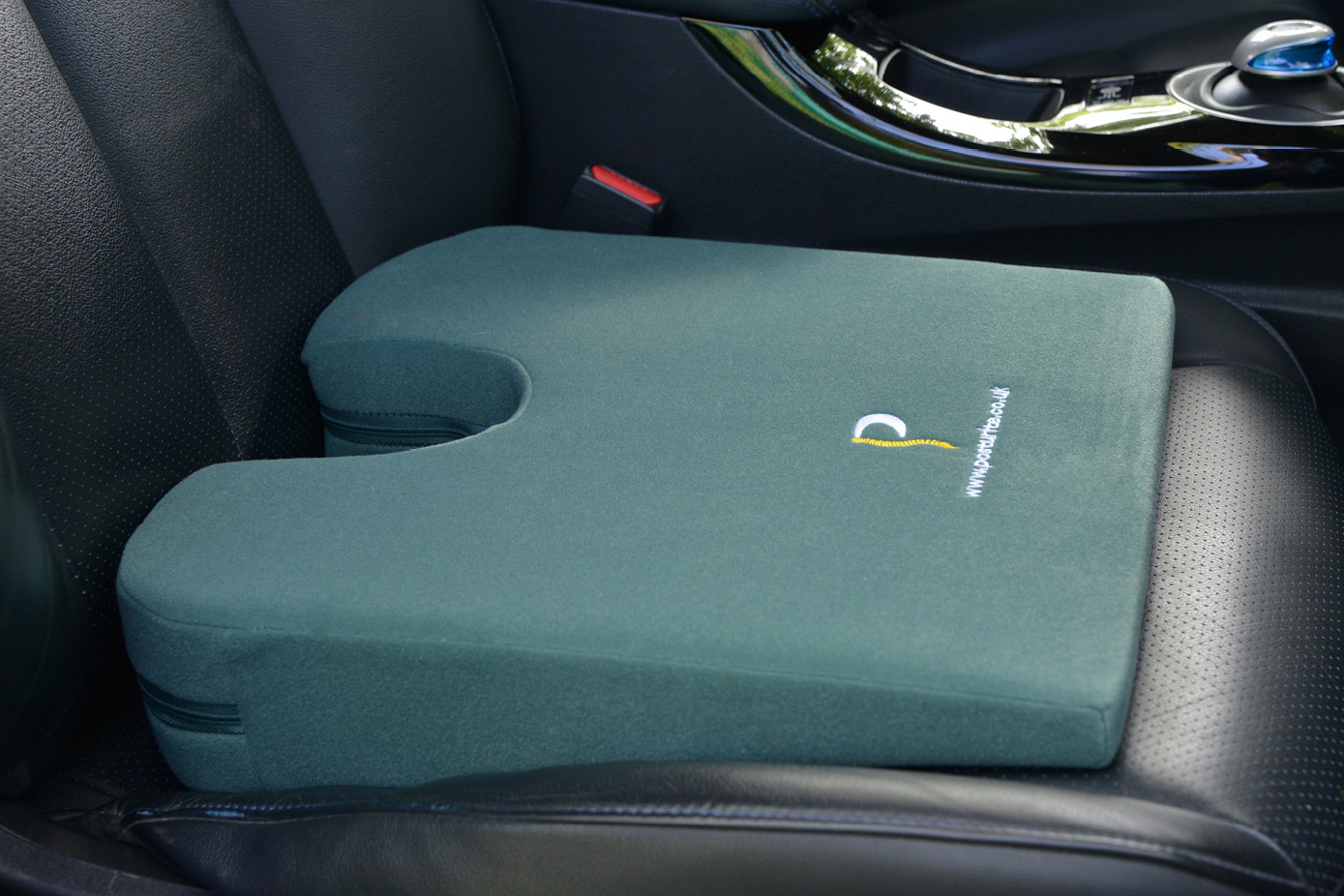
Check your overall driving position with the cushion in place, remembering that adding it of course changes your seated height and relationship with the pedals, steering wheel, headrest and vehicle controls.
A simple ergonomic driving position checklist
Before setting off, consider:
| Aspect | Checks |
|---|---|
| Seat |
|
| Steering wheel |
|
| Head and neck |
|
| Controls |
|
| Mirrors |
|
| Overall comfort |
|
Tips for driver comfort on longer journeys

Even a well-adjusted driving position does not eliminate the effects of prolonged sitting. It is crucial that longer journeys include opportunities to get out of the vehicle, walk around and change posture. Plan ahead for any travel for where to stop for breaks, and possible areas of traffic/roadworks to ensure the opportunity to take a break remains. If discomfort consistently develops during or after driving, this may indicate that the driving position, vehicle or additional support requires further consideration.
Employer duty of care for driving for work
The Health and Safety at Work etc. Act 1974 states that employers must treat driving as a workplace activity. Consequently employers have a legal duty to protect the health, safety, and welfare of employees driving as part of their roles, including those driving their own vehicles, and this includes addressing physical comfort, ergonomics, and fatigue.

You can refer to the HSE guidance ‘Employers - driving and riding safely for work’ to learn more.
The key takeaways
Good vehicle ergonomics isn't about finding one ‘perfect’ driving position. It is about creating a driving environment that allows you to operate the vehicle safely while providing appropriate support and minimising unnecessary reaching, stretching and sustained awkward postures.
Start with the seat, then adjust the steering wheel, check the controls, and finish by setting your mirrors.
If the vehicle's standard adjustment range cannot provide an appropriate position, additional supports may help. However, where significant limitations remain, it may be more appropriate to consider whether the vehicle itself is suitable for the driver.
At Posturite, we can help assess driving positions and identify practical solutions, from adjustments and vehicle supports through to considering alternative vehicle specifications if they’re needed. As drivers we face a unique set of ergonomic challenges, so let’s not overlook our comfort.
Read next: